I have had the most joyful experience with this firm. To be specific, Mrs.Scott is the most pleasant and professional staff member I have ever worked with from any firm. I am so honored to have Attorney Felton and his team representing me. And, this is why I would recommend this firm to everyone seeking to be treated respected with top tier service.


When you see a doctor, dentist, surgeon, nurse, or other healthcare provider, you expect careful treatment and clear communication. When a preventable medical mistake causes serious harm, Georgia law may allow injured patients and families to pursue a medical malpractice claim.
Medical malpractice cases are different from ordinary injury claims. They often require medical records, professional review, qualified medical support, and close attention to legal deadlines. A poor medical outcome alone does not always mean malpractice occurred. The question is whether a healthcare provider failed to meet the accepted standard of care and whether that failure caused measurable harm.
If you believe you or a loved one was injured because of medical negligence in Atlanta or anywhere in Georgia, Seay/Felton LLC Trial Lawyers can review what happened, explain your options, and help you determine the right next steps. Our team helps patients and families understand whether the facts may support a claim, who may be responsible, what evidence matters, and how to protect the case from the beginning.
Non-economic damages were previously capped in Georgia medical malpractice cases, but after a 2010 Georgia Supreme Court ruling, there is no longer a cap on non-economic damages. The value of any claim depends on the facts, the medical evidence, the severity of the harm, and how the injury has affected your life.
What Is Medical Malpractice?
Medical malpractice occurs when a healthcare provider fails to act with the level of care that a reasonably careful provider would use under similar circumstances, and that failure causes injury.
This is called the “standard of care.” The standard depends on the patient’s condition, the type of provider involved, and the information available at the time treatment decisions were made. A claim involving an emergency room, surgeon, dentist, OB-GYN, specialist, hospital, or primary care doctor may require different medical review.
Not every mistake is malpractice. Not every complication supports a lawsuit. A valid claim usually requires evidence that the provider’s conduct fell below the accepted standard of care and caused harm that likely could have been avoided with proper care.
view our practice areasWhat Are the Elements of a Medical Malpractice Claim in Georgia?
A Georgia medical malpractice claim generally requires proof of four elements:
- A provider-patient relationship existed: The doctor, dentist, nurse, hospital, clinic, or other healthcare provider had a duty to provide care to the patient.
- The provider failed to meet the standard of care: The provider did something a reasonably careful provider would not have done, or failed to do something a reasonably careful provider would have done under similar circumstances.
- The failure caused harm: The injury must be connected to the provider’s conduct. Healthcare providers and insurers may argue that the harm came from the patient’s underlying condition, not the care provided.
- The patient suffered damages: Damages may include medical bills, future care needs, lost income, pain and suffering, disability, loss of independence, or wrongful death damages when malpractice results in a fatal injury.
These elements are why careful case review matters. Medical records, test results, provider notes, discharge instructions, medication records, and follow-up care can help show what happened and whether the facts support a claim.
Examples of Medical Malpractice
Medical malpractice can happen in many healthcare settings throughout Atlanta and Georgia, including hospitals, emergency rooms, urgent care centers, dental offices, surgery centers, birthing units, pharmacies, rehabilitation centers, and specialty clinics.
Misdiagnosis or Failure to Diagnose
If a patient reports symptoms and is told nothing is wrong, but later learns they had a serious condition, this may support a malpractice claim if a reasonably careful provider should have ordered testing, made a referral, or taken other steps that likely would have led to an earlier diagnosis.
Failure-to-diagnose cases may involve cancer, stroke, heart attack, infection, sepsis, internal bleeding, pregnancy complications, fractures, or other serious conditions. The key issue is not simply that the diagnosis was missed. The issue is whether the provider had information that should have led to a different course of action.
Prescription and Medication Errors
Medication errors can cause serious harm when a provider prescribes the wrong drug, orders the wrong dose, fails to review allergies, misses dangerous drug interactions, or does not monitor lab results.
Pharmacies, hospitals, and long-term care facilities may also be involved when a medication error happens because of poor charting, unsafe dispensing, communication failures, or improper administration.
Surgical Errors
Surgical malpractice cases may involve wrong-site surgery, wrong-patient procedures, retained surgical items, anesthesia errors, nerve damage, bowel perforation, failure to control bleeding, post-surgical infection, or failure to respond to complications.
Some surgical complications can happen even when the medical team acts properly. A claim depends on whether the complication was caused by a preventable mistake or an unreasonable delay in care.
Birth Injuries and Pregnancy Complications
Birth injury cases may involve delayed C-sections, failure to monitor fetal distress, improper use of delivery tools, untreated maternal complications, medication mistakes, or failure to respond to warning signs during labor and delivery.
These cases are often highly complex because they may involve both the mother’s care and the baby’s condition before, during, and after delivery.
Emergency Room Errors
Emergency room malpractice may involve improper discharge, delayed diagnosis, failure to order necessary testing, failure to recognize stroke or heart attack symptoms, or poor communication during a patient handoff.
ER providers often work under pressure, but they still must provide care that meets the applicable standard under the circumstances.
Dental Malpractice
Dental malpractice may involve nerve injuries, anesthesia complications, untreated infections, wrong-tooth extractions, delayed diagnosis of oral cancer, or serious injury during a dental procedure.
As with other medical claims, the issue is whether the dental provider’s actions fell below the accepted standard of care and caused harm.
Who Can Be Liable in a Medical Malpractice Case?
A malpractice claim may involve more than one provider or facility. Liability may depend on who provided the care, who supervised the care, who employed the provider, and whether a facility’s policies or systems contributed to the harm.
Potentially responsible parties may include:
- Doctors, surgeons, dentists, anesthesiologists, and specialists.
- Nurses, physician assistants, nurse practitioners, and other licensed professionals.
- Hospitals and health systems.
- Emergency rooms and urgent care centers.
- Dental offices.
- Outpatient surgery centers.
- Pharmacies.
- Laboratories and imaging centers.
- Long-term care or rehabilitation facilities.
- Corporate operators or management companies when their decisions affect staffing, training, safety, or patient care.
Facility liability is especially important when the harm was not caused by one isolated mistake. A hospital or clinic may be responsible when unsafe policies, poor supervision, lack of training, understaffing, bad handoff communication, or delayed test-result review contributed to the injury.
Why Medical Records Matter in a Malpractice Case

Medical records are often the foundation of a malpractice case. They can show what symptoms were reported, what tests were ordered, what providers knew, when they knew it, and what treatment decisions were made.
Important records may include:
- Hospital charts.
- Emergency room notes.
- Doctor and nursing notes.
- Medication administration records.
- Lab and imaging results.
- Surgical and anesthesia records.
- Discharge instructions.
- Referral notes.
- Follow-up records.
- Pharmacy records.
- Prior medical history.
- Billing records.
- Death certificates and autopsy records in fatal cases.
Records can also reveal problems. Missing documentation, delayed entries, inconsistent notes, or unexplained changes may become important during the review. A medical malpractice lawyer can help request, organize, and evaluate these records so the timeline is clear.
Professional Review and Georgia’s Expert Affidavit Requirement
In most malpractice lawsuits, Georgia law requires the complaint to include an affidavit from a qualified expert. That affidavit must identify at least one specific negligent act or omission and the factual basis for that claim.
This requirement makes early legal review important. A lawyer may need time to obtain records, identify the correct medical issues, consult with the right type of professional, and determine whether the evidence supports filing a claim.
An expert affidavit does not prove the entire case at the beginning. It helps show that the claim has been reviewed by a qualified professional and has a factual basis.
Damages in a Georgia Medical Malpractice Case
Medical malpractice can affect a person’s health, work, family, independence, and future care needs. The damages available depend on the facts, the severity of the injury, and the proof supporting the claim.
Potential damages may include:
- Past and future medical expenses.
- Rehabilitation, therapy, and follow-up care.
- Medication and medical equipment.
- Lost wages.
- Reduced earning ability.
- Pain and suffering.
- Physical limitations or disability.
- Scarring or disfigurement.
- Loss of enjoyment of life.
- Loss of independence.
- Emotional distress.
- Wrongful death damages when malpractice causes a fatal injury.
Damages must be supported by evidence. Medical records, bills, wage records, professional opinions, and testimony from the patient and family members may all help show the full impact of the harm.
How Long Do You Have to File a Medical Malpractice Claim in Georgia?
Georgia medical malpractice deadlines are strict. In many cases, a lawsuit must be filed within two years after the injury or death caused by the alleged negligent act or omission. Georgia also has a five-year statute of repose, which can bar claims after a certain point even when the harm was not discovered right away.
Some facts can affect the deadline, including the patient’s age, the type of injury, whether a foreign object was left in the body, whether records need to be requested and reviewed before filing, and whether the case involves wrongful death. Because deadlines can be complicated, it is safest to speak with a medical malpractice lawyer as early as possible.
Do not wait until you have every record or every answer before asking for help. Early review can help preserve evidence, protect deadlines, and determine whether the case needs professional evaluation.
Should I Contact a Medical Malpractice Lawyer?
You may want to contact a lawyer if:
- A loved one died after a possible medical mistake.
- A provider failed to act on abnormal test results.
- A hospital discharged you too early or ignored worsening symptoms.
- You suffered harm after a medication, anesthesia, or monitoring error.
- The provider or facility will not answer reasonable questions.
- You are being told the injury was unavoidable, but something still feels wrong.
A consultation does not mean you must file a lawsuit. It gives you a chance to understand whether the facts may support a claim and what steps may be needed next.
How a Medical Malpractice Lawyer Can Help
Medical malpractice cases are often document-heavy and strongly defended. Healthcare providers, insurers, and facility operators may argue that the outcome was unavoidable, that the patient’s underlying condition caused the harm, or that the provider acted reasonably.
A lawyer can help by:
- Obtaining and reviewing medical records.
- Building a clear timeline of the care.
- Identifying the providers and facilities involved.
- Consulting qualified medical professionals.
- Evaluating causation and damages.
- Handling communication with insurers, defense lawyers, and facility representatives.
- Preparing the case for negotiation, litigation, or trial when necessary.
At Seay/Felton LLC Trial Lawyers, we help injured patients and families across Atlanta and Georgia understand their options after serious medical harm. Our team can review the facts, explain the process, and help protect your rights while you focus on your health and family.
Medical Malpractice Results
Past results do not guarantee future outcomes. Every case depends on its own facts, evidence, injuries, and applicable law. Prior medical malpractice cases can show the kinds of serious harm these claims may involve and the level of preparation they require.
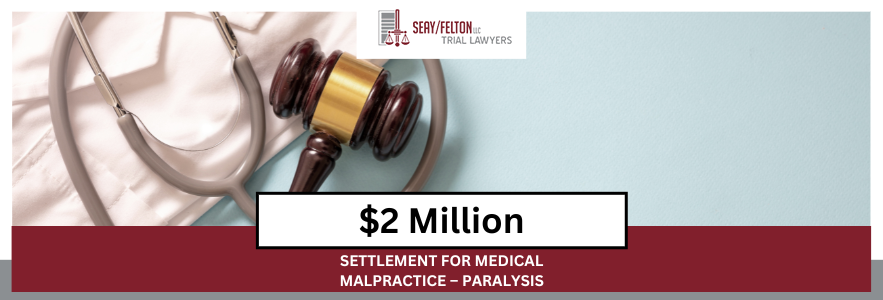
WE OBTAINED $2,000,000 FOR OUR CLIENT

A severe oversight by a doctor led to a life-altering outcome for our client. After being involved in a car accident, her spinal cord injury was not recognized or treated promptly, resulting in permanent paralysis from the waist down. Seay/Felton LLC Trial Lawyers pursued accountability and compensation to support her ongoing care needs.
WE OBTAINED $2,000,000 FOR OUR CLIENT
During childbirth, our client suffered an injury that went untreated, leading to significant health complications. Seay/Felton LLC Trial Lawyers pursued compensation for her ongoing medical needs and suffering.
Explore our Results PageTalk to an Atlanta Medical Malpractice Lawyer Today
If you were harmed by medical care in Atlanta or anywhere in Georgia, Seay/Felton LLC Trial Lawyers can listen, review the facts, and explain possible next steps. Call 404-738-7966 or contact us online at https://www.sftriallawyers.com/contact-us/. Let’s talk about what happened and how we may be able to help.
Frequently Asked Questions
Medical malpractice may occur when a healthcare provider fails to meet the accepted standard of care, and that failure causes harm. A bad result alone does not always mean malpractice happened. The medical records, timeline, provider decisions, and professional review all matter.
You may be able to bring a claim against a hospital or medical facility if its staff, policies, supervision, communication failures, or unsafe systems contributed to the harm. Hospitals may also be involved when nurses, technicians, or other employees make preventable mistakes. Liability depends on the facts and the relationship between the provider and the facility.
Important records may include hospital charts, office notes, test results, imaging reports, medication records, surgical records, discharge instructions, billing records, and follow-up records. If the case involves death, additional records such as the death certificate or autopsy report may be important. A lawyer can help determine which records are needed.
In most malpractice lawsuits, Georgia requires an expert affidavit to be filed with the complaint. The affidavit must come from a qualified expert and identify at least one negligent act or omission with a factual basis. This is one reason early record review is so important.
Damages may include medical expenses, future care needs, lost income, reduced earning ability, pain and suffering, disability, and other losses supported by the evidence. In fatal cases, surviving family members may have a wrongful death claim. The value of a case depends on the facts, the injuries, and the available proof.
Schedule a Free consultation
Contact Seay/Felton
"*" indicates required fields

experienced personal injury attorneys
Testimonials
Hear directly from those we've stood beside. Their stories reflect our commitment and the personal touch we bring to every case.
view testimonialsI have absolutely nothing but good things to say about my lawyer he was very responsive very communicative even during the pandemic, truly listened to my needs and helped me get the most money I possibly could I highly recommend Attorney Seay!
Jamie Freer
I highly recommend Seay/Felton to handle your legal affairs. Attorney Seay, and Elizabeth from the paralegal team, are knowledgeable, efficient, empathetic, and attentive. I appreciate their tenacious approach to business which yields positive results. These are top tier experts who operate in excellence. You’ll be in good hands.
Adrienne Leon
Mr. Seay handled my case for my daughter who passed away in 2015. Although it took almost 7 years, he stuck with me through thick and thin. His attention to detail, caring nature and tenacity shined through every step of the way. His dedication allowed a favorable outcome that our family will be forever grateful for. He will always have a special place in our hearts. I would recommend him for any case as he is a lawyer who truly fights for his clients 100% every time.
Cyber Dojo
My experience with this firm was beyond exceptional! From beginning to end they were thorough, communicative and left no stone unturned in my car accident case. They immediately got me the care I needed & ensured I was taken care of throughout my treatments. Alexandria went above and beyond to get me what I deserved after such a traumatizing situation. I highly recommend this firm for their professionalism, knowledge of personal injury cases and the level of care they have for their clients! This was my first time dealing with something like this & I’m grateful that I was in good hands.
Xania Jackson
Omg God where do I start to say that this was the best experience I’ve had with a law firm that handles accident injuries. Attorney Alexandria was the best she kept in contact every step of the way from doctor visits to so on. I definitely highly recommend Seay Felton law Firm for any accident injuries. I will most certainly use them again if needed. Thanks again Attorney Alexandria.
TeHeQuah Scriven
I am a trial attorney of 30 plus years. I have referred several cases to Seay Felton, LLC over the years. They ALWAYS get great result$ for the clients that I refer to them. The people I send to them always come back with rave reviews. I would trust them to handle a case for a relative or friend. They have the highest standards of professional conduct and they execute.
Tobe Johnson
My Daughter was severely injured by a pit bull and I googled best Attorney in Atlanta. I saw Attorney Seay law practice in the google search. I read all his reviews which were exceptional. He also fought and won a prior dog bite injury . My Seay was very kind, understanding and made us feel like we were in good hands with him . He fought for my daughter and the case was settled. I never had a second thought . Best decision ever. Thank you Mr Seay and your team .
Althea Chung
I happily give 5 stars! I was really fortunate to have had such a diligent, knowledgeable attorney like Quinton Seay fight on my behalf. I faced some challenges concerning my dental malpractice case, but Attorney Seay and his wonderful paralegal, Lori Wyche, did an excellent job winning a handsome settlement for me. To top it all off, they both operated with integrity and professionalism during the entire process. I guarantee you can trust them with your legal affairs. You won’t regret it.
Nicole L
Seay & Felton Law Firm was very prompt in assisting me with my case and displayed outstanding professionalism. Seay & Felton kept me updated every step of the way pertaining to my case. The firm answered all my questions and concerns in a timely manner. The Paralegal(s) were very nice and kind showed a great concern as we talked on the phone numerous times. I was very pleased with Seay & Felton Law Firm and will refer them to all my family and friends who may need a law firm to represent them.
Katrina Hawkins
Attorney Quinton Seay and his paralegal, Lori Wyche, did an excellent job handling my mother’s medical malpractice lawsuit and won a very good settlement. No amount of money can replace what my mother went through. However, Attorney Seay got me some closer by making the liable party accountable. Malpractice cases are long and tedious, but Attorney Seay was persistent and kept fighting. Lori Wyche was the best. She always made sure I stayed informed, explained everything in detail, was compassionate and professional the entire time. I would definitely recommend Seay/Felton Trial Lawyers. They have the experience, knowledge and they get results.
V B
Seay/ Felton, LLC Trail Lawyers were professional and courtesy. The Staff took the time to explain each area of the legal process, and consistently took my opinions seriously. I would choose and highly recommend Seay/Felton to anyone seeking legal advice.
Laura Scott-gist
Attorney Seay and Mrs. Holloway worked diligently to settle my case, which put a smile on my face, in the end! Mrs. Holloway was very professional and responsive as she listened to both, my concerns and needs. I am a returning client and I will definitely use them again, should I need any type of legal service!
LaToya Mitchell
Mr. Seay kept me updated at all times and when I reached out to him for questions or concerns I had, he responded in a timely manner. Very professional and worked hard with my case! I was also pleased with his paralegal Mrs. Alvina Stewart, who was professional as well. I would definitely keep Mr. Seay and his team in mind if I ever need him again in the future. Thank you
Marketia Dalton
Attorney Felton and his team walked with me every step of the way during my dad’s case. Their senior paralegal Ann was very kind and pleasant. I couldn’t think of a better law firm to represent me and my family during a difficult time in our lives. Thanks Seay/Felton Trial Lawyers and Team!
Dorothy Barnes
I am very grateful to have gotten the opportunity to work with Attorney Felton and also Paralegal, Ms. Alvina Stewart. They really put their all in and I was able to have a settling feeling that I was in good hands throughout the entire process.
Akeala Flanigan
I would love to give Attorney Felton and Ms. Holloway a HUGE thank you, for handling my accident case. They kelp me in the know with how my case was progressing, and got me the best possible settlement. Thank you guys for handling my case with care.
Shamere Townsend
They provide excellent service , their staff is very friendly. Attorney Mckinley, Attorney Seay, along with Amber Reese did a great job. I highly recommend this law firm for anyone . Mr. moebeM is a outstanding Attorney along with his staff to The one person I really want to thank is Amber Reese she’s a outstanding Paralegal, she’s very kind, and she gets things done .
kevin
Great experience with also a Great Outcome. My case was handled by Miss Alvina Stewart, Miss Janet Scott, and Mr Felton. They did an amazing job keeping me posted and settling my case.
Jose Parris
Thank to Sean/Felton,LLC Trial Lawyers,for taking care of my injury case,Felicia Holloway in the Pre-Litigation Paralegal department was always responsive and professional
Patrick Forrester
Excellent customer service! I’d definitely recommend this firm.
Gary Black
Mr. Felton is my classmate. I couldn’t even think of using anyone else. For my case. He said what he can do. And that’s what he did. Great job
Terry Gaines
Once Mr Seay explain how they work, I didn’t have to call them they called me kept me updated, and as the case progressed, I was patience I trusted him and it paid off.
Deborah Mallory
I had a great experience. I was filled in on every detail of the process and had every question answered. I can’t recommend anyone else to help.
Luis Ortiz
I am Lorene Green and I truly am grateful for Seay&Felton for handling my case especially Felicia Holloway Thank you so much
Crystal Green
They always contacted me in a timely matter and answered every question I had. I would definitely refer them to others in search of good representation.
Marquis Brown
Felton is a great attorney who took my family’s case… and won. Thanks Mr. Felton.
Contella West
Me. Seay and his paralegal, Alvina Stewart, did a great job handling my case and won a great settlement for me.
Dominique Harris
They was very professional and hard working and also keep you updated on everything!!!!!
Ryan Smith
Great advice and always followed up. Highly recommend.
Winter Planner-Land
Two of the BEST ATTORNEYS in GEORGIA.
Tony Graham
Thank you Felecia Holloway for your advocacy