
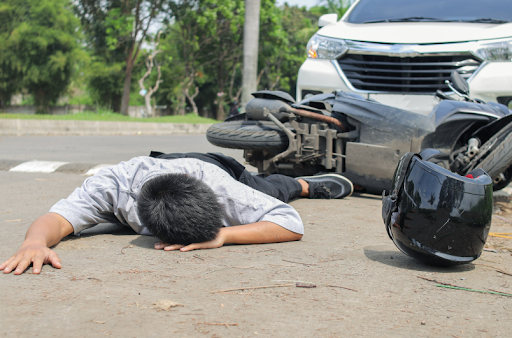
Yes, you can sue someone personally after a motorcycle accident in Georgia if their negligence caused your injuries. You may file a personal injury lawsuit against the at-fault driver even if they have auto insurance. However, whether you can recover compensation depends on the available insurance coverage, the driver’s financial circumstances, and whether other parties share responsibility.
Say a driver turns left in front of your motorcycle on Peachtree Street in Atlanta and causes a collision. You may have grounds to pursue a lawsuit. If the driver’s insurance does not cover your medical bills, lost wages, and other damages, additional sources of compensation may be available.
At Seay/Felton LLC Trial Lawyers, our Atlanta motorcycle accident lawyers help injured motorcyclists investigate accidents, determine who may be responsible, and understand their options for pursuing compensation under Georgia law.
Call Seay/Felton at 404-902-6444 or contact us online for a free consultation. You do not pay attorney fees unless we recover compensation for you.
When Can You Sue Someone Personally After a Motorcycle Accident?
You may have grounds to file a motorcycle accident lawsuit when another person’s negligence causes a collision that results in injuries or financial losses. A Georgia personal injury lawyer can review the circumstances of the crash, identify potentially responsible parties, and help determine whether you have a valid claim.
Under Georgia law, a negligence claim generally requires evidence that the responsible driver owed you a duty of care, breached that duty, and caused injuries that resulted in legally recoverable damages.
Common examples of negligent driving include:
- Failure to yield: A driver turns left across an approaching motorcyclist’s path without allowing enough time to pass safely.
- Distracted driving: A driver looks at a phone instead of watching traffic and strikes a motorcycle.
- Unsafe lane changes: A driver merges into an occupied lane without checking for a motorcycle.
- Speeding: A driver travels too fast for traffic or road conditions and cannot stop before a collision.
- Impaired driving: A driver operates a vehicle under the influence of alcohol or drugs and causes a crash.
Showing that a driver broke a traffic law does not, on its own, prove the value of your claim. Medical records, accident reports, witness statements, and other evidence may be needed to connect the driver’s actions to the injuries.
Can You Sue an At-Fault Driver Who Has Insurance?
Yes. Having auto insurance does not prevent an at-fault driver from being named personally in a motorcycle accident lawsuit.
In Georgia, an injured motorcyclist will often begin by pursuing a claim through the responsible driver’s liability insurance. If the insurance company disputes fault, questions the injuries, or refuses to offer an acceptable settlement, filing a lawsuit may become necessary.
Although the lawsuit generally names the responsible driver, their liability insurer may provide a legal defense and pay covered damages up to the applicable policy limits.
Suing someone personally does not automatically mean you must collect compensation directly from their bank account, wages, or property. Insurance may cover some or all of the recoverable damages.
Suppose a motorcycle accident causes $150,000 in recoverable damages, but the at-fault driver has only $25,000 in bodily injury liability coverage available for the injured rider. That leaves $125,000 the policy will not cover. An attorney may investigate whether additional insurance, other responsible parties, or legally collectible personal assets could provide another source of compensation.
What Happens If the At-Fault Driver Does Not Have Enough Insurance?
Insufficient insurance coverage can make recovering compensation more difficult, especially when a motorcycle accident causes serious injuries.
Georgia generally requires drivers to carry minimum liability insurance of $25,000 for bodily injury or death of one person, $50,000 for bodily injury or death of two or more people in one accident, and $25,000 for property damage.
These minimum limits can fall far short when a motorcyclist suffers a traumatic brain injury, spinal cord injury, or multiple fractures requiring extensive medical treatment.
Can You Recover Compensation From the Driver’s Personal Assets?
Potentially. If a court enters a judgment against the at-fault driver that exceeds available insurance coverage, the driver may be personally responsible for the unpaid amount.
However, obtaining a judgment and collecting payment are different matters. Georgia law protects certain property and income from collection, and some drivers have few assets available to satisfy a judgment.
Before pursuing compensation beyond insurance limits, an attorney may investigate the driver’s financial circumstances and determine whether additional recovery is practical.
Can Your Motorcycle Insurance Cover the Difference?
Uninsured motorist (UM) coverage may provide additional compensation when the responsible driver has no insurance or insufficient liability coverage.
Georgia insurers offer two types of UM coverage: added-on coverage and reduced-by coverage. Added-on coverage pays on top of the at-fault driver’s liability limits. Reduced-by coverage is reduced by the amount the at-fault driver’s insurance pays. The amount available depends on the policy terms, coverage limits, and circumstances of the accident.
A rider injured by a driver carrying Georgia’s minimum liability coverage may have additional protection through an applicable added-on UM policy.
Reviewing your own insurance policy is important before deciding whether to pursue compensation directly from the at-fault driver.
Who Else Can Be Held Responsible for a Motorcycle Accident?
The driver who caused the collision is not always the only party who may be legally responsible. Depending on how the accident happened, an employer, vehicle owner, or commercial business may also share liability.
Employers of Negligent Drivers
An employer may be responsible for an employee’s negligent driving when the employee causes an accident while acting within the scope of employment.
A delivery driver traveling through downtown Atlanta might strike a motorcyclist while making a work-related delivery. If the driver was performing job duties at the time, the employer may also face liability. However, an employer is not automatically responsible for every accident involving an employee.
Vehicle Owners Who Negligently Entrust Their Vehicles
A vehicle owner may face liability if they negligently allow an unsafe or unqualified person to operate their vehicle.
An owner who knowingly allows an unlicensed or otherwise incompetent driver to use their vehicle may face a negligent entrustment claim if the necessary legal elements are established. Still, vehicle ownership alone does not automatically establish liability for another person’s negligent driving in Georgia.
Commercial Trucking Companies
Motorcycle accidents involving commercial trucks may require a broader investigation. An Atlanta truck accident lawyer can examine whether the truck driver, trucking company, or another party may be responsible for the collision.
Suppose a tractor-trailer changes lanes on Interstate 285 and strikes a motorcycle. Investigators may examine the truck driver’s conduct, employment relationship, maintenance records, and company practices. Depending on the evidence, a trucking company or another business may share responsibility for the collision.
Identifying all potentially liable parties is especially important when the injured motorcyclist’s losses exceed one driver’s insurance coverage.
Can You Sue If You Were Partially Responsible for the Accident?
Yes. Georgia follows a modified comparative negligence rule, which means you may still recover compensation if you were less than 50% responsible for the accident.
Under O.C.G.A. § 51-12-33, your damages are generally reduced by your percentage of fault. If you are 50% or more responsible, you generally cannot recover damages under this rule.
Say a jury determines that your motorcycle accident caused $100,000 in damages, but you were 20% responsible for the collision. Your damages would generally be reduced by $20,000, leaving $80,000.
Insurance companies may argue that a motorcyclist was speeding, following too closely, or otherwise contributing to the crash. Those arguments still have to hold up against the evidence. Police reports, photographs, witness statements, video footage, and accident reconstruction evidence may help establish what happened.
What Compensation Can You Recover in a Motorcycle Accident Lawsuit?
If another person’s negligence caused your injuries, you may be entitled to pursue economic and noneconomic damages. The compensation available depends on the severity of your injuries, their effect on your life, and the evidence supporting your claim.
Potential damages include:
- Medical expenses: Emergency treatment, surgery, hospitalization, rehabilitation, and reasonably necessary future medical care.
- Lost wages: Income lost because your injuries prevented you from working.
- Reduced earning capacity: Future income losses when injuries affect your ability to earn a living.
- Pain and suffering: Physical pain and other legally recognized effects of your injuries.
- Emotional distress: Psychological harm associated with the accident when legally recoverable.
- Property damage: Repair or replacement costs for your motorcycle and other damaged belongings.
A rider with a serious leg injury may require multiple surgeries and several months of rehabilitation. If the injury prevents the rider from returning to a physically demanding job, the claim may involve both past lost income and reduced future earning capacity.
In limited circumstances, punitive damages may also be available under Georgia law. These damages have separate legal requirements and are not awarded simply because an accident caused serious injuries.
How Long Do You Have to File a Motorcycle Accident Lawsuit in Georgia?
Most Georgia personal injury claims, including motorcycle accident claims, must be filed within two years from the date of injury (O.C.G.A. § 9-3-33), but some cases may involve different rules or shorter notice requirements.
Cases involving minors, government defendants, or certain criminal proceedings may require additional analysis. Claims involving government entities may also have special notice requirements with shorter deadlines.
Waiting too long can create other challenges. Surveillance footage may be deleted, witnesses may become difficult to locate, and physical evidence may disappear.
Contacting an attorney early can help you confirm your deadline and preserve evidence that may support your claim.
What Should You Do Before Filing a Motorcycle Accident Lawsuit?
Before filing a lawsuit, it is important to understand who caused the crash, what insurance coverage is available, and whether pursuing legal action is practical. The following steps may help protect your claim:
- Seek medical attention: Obtain appropriate treatment and follow your healthcare provider’s recommendations. Keep records of your injuries, treatment, and medical expenses.
- Preserve accident evidence: Save photographs, damaged riding gear, repair estimates, witness information, and any available video footage.
- Review insurance coverage: Identify the at-fault driver’s liability coverage and any uninsured motorist coverage that may apply.
- Document your financial losses: Keep medical bills, wage statements, receipts, and records of ongoing treatment expenses.
- Review settlement documents carefully: Signing a settlement release may prevent you from pursuing additional compensation from the released parties.
- Speak with a motorcycle accident attorney: An attorney can evaluate liability, available insurance, potential defendants, and the practical challenges of collecting compensation.
One important issue is whether an insurance settlement requires you to release the responsible driver from further liability. Accepting a driver’s $25,000 policy limits in exchange for a broad release, for instance, could affect your ability to pursue additional compensation. The release terms and applicable insurance requirements should be reviewed before signing.
Is It Worth Suing Someone Personally After a Motorcycle Accident?
Whether a personal lawsuit is worth pursuing depends on the strength of your claim, the amount of your losses, and the compensation realistically available.
Filing a lawsuit may be appropriate when the responsible driver disputes fault, the insurer refuses to offer a reasonable settlement, or your damages exceed the available insurance coverage. However, pursuing a driver with limited insurance and few collectible assets may not result in enough compensation to cover your losses.
That is why it helps to investigate insurance coverage, additional responsible parties, and the ability to collect a judgment before making decisions about litigation. A Georgia motorcycle accident lawyer can help you evaluate these factors and understand the legal options available in your situation.
Frequently Asked Questions
1. Can I Sue Someone Personally If They Have No Insurance?
Yes. You may file a lawsuit against an uninsured driver whose negligence caused your motorcycle accident. However, recovering compensation may be difficult if the driver has limited assets. Your own uninsured motorist coverage may provide another source of recovery.
2. Can I Sue Someone Personally for Pain and Suffering?
Yes. If another person’s negligence caused your motorcycle accident injuries, you may be able to pursue compensation for physical pain, emotional distress, and other legally recognized noneconomic damages. The amount depends on the evidence and circumstances of your case.
3. Can I Sue a Driver Who Borrowed Someone Else’s Car?
Yes. A driver may be personally responsible for injuries caused by their negligence even if they do not own the vehicle. The vehicle owner’s insurance may also be relevant, and the owner could face liability under certain circumstances. Ownership alone does not establish negligence.
4. Can I Sue After Accepting an Insurance Settlement?
It depends on the terms of the settlement agreement. If you signed a release, you may have given up the right to pursue additional claims against the released parties. Before accepting a settlement, consider having an attorney review the agreement and any effect on other available coverage.
5. Do I Have to Sue the Driver Personally to Receive Compensation?
Not always. Many motorcycle accident claims are resolved through insurance negotiations without filing a lawsuit. Litigation may become necessary if the parties cannot agree on fault, damages, or a reasonable settlement.
Talk to Seay/Felton About Your Motorcycle Accident
If another driver’s negligence caused your motorcycle accident, you may have grounds to pursue compensation through an insurance claim or personal injury lawsuit. Understanding your options is particularly important when the responsible driver’s insurance does not cover your losses.
Our legal team helps injured motorcyclists investigate crashes, identify potentially responsible parties, review insurance coverage, and evaluate their legal options.
Whether your accident happened in Atlanta, Macon, Savannah, Warner Robins, or another Georgia community, we can review your circumstances and discuss possible next steps.
Call Seay/Felton at 404-902-6444 or contact us online to discuss your motorcycle accident and learn whether filing a lawsuit may be appropriate for your situation. You do not pay attorney fees unless we recover compensation for you.