
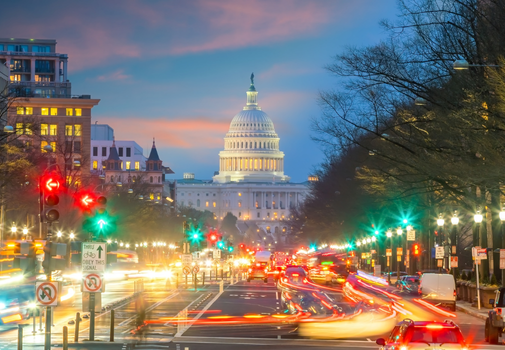
Washington, D.C., is a city of striking contrasts. As the nation’s capital, it offers historical landmarks, vibrant communities, and dynamic culture. But behind the monuments and museums lie neighborhoods where residents and visitors must navigate serious safety concerns daily. While crime doesn’t define a community, understanding the risks in certain parts of the city can help you stay alert and protect yourself and your loved ones.
The most dangerous neighborhoods in Washington, D.C., are often identified using reported violent crime, property crime, and neighborhood safety concerns. Deanwood, Brentwood, Anacostia, Trinidad, Columbia Heights, Benning Ridge, and Shaw are among the areas frequently discussed in neighborhood safety guides. However, crime levels vary by location and year, and these neighborhoods should not be treated as a verified current ranking without updated crime data.
In this article, we’ll break down the seven frequently discussed high-risk neighborhoods in Washington, D.C., according to publicly available data. We’ll also explore how negligent security, unsafe road conditions, and careless property management contribute to personal injury risks, and what your legal rights are if you’re harmed due to someone else’s negligence.
A neighborhood’s crime rate does not automatically make a property owner responsible for an injury. However, when a business or landlord knows about specific security risks and fails to take reasonable precautions, an injured person may have grounds to pursue a negligent security claim.
1. Deanwood (Northeast)
Deanwood is a residential neighborhood in Northeast Washington, D.C., near the Maryland border. Like other urban communities, it has experienced concerns involving violent crime, property crime, and public safety. However, conditions vary from one street or property to another, and current police reports are needed to assess crime trends accurately.
Residents and visitors may face safety concerns around poorly maintained apartment buildings, parking areas, and properties with limited visibility. When a property owner knows about recurring criminal activity, reasonable security measures may become important in preventing foreseeable harm.
- Safety Concerns: Reported violent crime, property theft, poorly lit parking areas, and unsecured building entrances.
- Legal Insight: If someone is assaulted in an apartment building where management ignored repeated reports of broken locks or similar security problems, the circumstances may support a negligent security investigation. Liability depends on the property owner's duty, knowledge of the danger, and whether a failure to take reasonable precautions contributed to the injury.
2. Brentwood (Northeast)
Brentwood remains one of D.C.’s neighborhoods where residents and businesses may encounter concerns involving robbery, theft, and other reported criminal activity.
Located near major transportation routes and commercial areas in Northeast D.C., Brentwood includes residential properties, businesses, and parking facilities. Security conditions differ across these locations, making it important to evaluate the circumstances of a particular incident rather than assuming every property presents the same risks.
- Safety Concerns: Robberies, vehicle-related theft, and security concerns in parking lots or commercial properties.
- Legal Insight: Businesses and property managers may have a duty to address foreseeable security risks. For example, repeated robberies in a commercial parking lot could make previous complaints, lighting conditions, surveillance practices, and security policies relevant to an injury claim. The absence of a camera or security guard alone does not establish negligence.
3. Anacostia (Southeast)
Anacostia has a historically high violent crime rate and has been the subject of ongoing discussions about community safety, economic development, and neighborhood investment. Anacostia also has a rich cultural history, established residential communities, and active local businesses. Crime patterns should be evaluated using recent incident reports rather than broad assumptions about the neighborhood or its residents.
Safety concerns may arise near transit facilities, apartment complexes, parking areas, and commercial properties. In some situations, inadequate lighting, broken access controls, or neglected maintenance may contribute to preventable injuries.
- Safety Concerns: Reported assaults, robberies, unsafe walkways, and inadequate security at certain properties.
- Legal Insight: An assault or injury on a poorly maintained property may raise questions about premises liability. For example, an apartment complex with repeated security complaints and unrepaired entrance locks may warrant investigation if a resident or lawful visitor is attacked.
An injured person may benefit from speaking with a Washington, D.C. negligent security lawyer to determine whether the property owner’s conduct contributed to the incident.
4. Trinidad (Northeast)
Located near the H Street Corridor, Trinidad has experienced public safety concerns involving property crime and violent incidents. However, claims about increases in gang activity, home invasions, or burglaries should be supported by current police data before being presented as neighborhood-wide trends.
Trinidad contains residential blocks, apartment buildings, and businesses where reasonable property maintenance and security practices can help reduce certain risks. Problems such as broken entrance doors, inadequate lighting, and ignored security complaints may become relevant when an injury occurs.
- Safety Concerns: Violent incidents, theft, unauthorized entry, and security problems at residential properties.
- Legal Insight: Residents injured during a break-in or visitors assaulted on a property may have legal options when inadequate security contributed to foreseeable harm. A negligent security claim requires more than proof that a crime occurred. Evidence must connect the property owner's unreasonable conduct to the injury.
5. Columbia Heights (Northwest)
Although Columbia Heights is a bustling commercial and residential hub, it also has experienced reported property crimes and violent incidents. Late-night foot traffic and dense crowds can create situations in which businesses and property managers need to pay attention to security and visitor safety.
The neighborhood’s restaurants, retail locations, apartment buildings, and Metro access attract residents and visitors throughout the day. Security concerns may differ significantly between a busy shopping area, a residential building, and a parking facility.
- Safety Concerns: Theft, robberies, crowded commercial areas, and security concerns near transit access points.
- Legal Insight: Someone assaulted in a parking garage or shopping center may have a potential claim if the property owner failed to address a foreseeable security risk. Relevant evidence may include previous incidents, security complaints, surveillance footage, and maintenance records.
In addition to criminal incidents, crowded sidewalks and busy intersections may create risks for pedestrians. When a negligent driver causes an injury, a Washington, D.C. pedestrian accident lawyer can help evaluate the circumstances of the collision.
6. Benning Ridge (Southeast)
Benning Ridge is a residential community in Southeast Washington, D.C. Public safety concerns may include reported robberies, theft, and other criminal incidents, although current police data is necessary to determine whether particular offenses are increasing or decreasing.
For residents of rental housing, building maintenance and access controls can play an important role in everyday safety. Property owners should evaluate known hazards and take reasonable steps consistent with their legal responsibilities.
- Safety Concerns: Theft, inadequate lighting, unsecured entrances, and poorly maintained common areas.
- Legal Insight: If an apartment building has a history of unauthorized entry and management repeatedly fails to repair a damaged entrance door, those facts may become relevant after a violent attack. Whether the landlord is legally responsible depends on the circumstances and applicable D.C. law.
7. Shaw (Northwest)
Shaw is a historic neighborhood known for its restaurants, entertainment venues, and residential communities. Theft and assault near clubs, bars, and metro stations are among the safety concerns that may arise in busy entertainment districts.
Crowded venues, late-night transportation, and heavy pedestrian activity can create additional safety challenges. Businesses that know about recurring violent incidents may need to consider appropriate precautions based on the circumstances.
- Safety Concerns: Theft, assaults, crowded sidewalks, and traffic hazards around entertainment venues.
- Legal Insight: Restaurants, nightclubs, and other businesses may face negligent security claims when inadequate precautions contribute to foreseeable criminal attacks. However, a business is not automatically responsible for every assault on its premises, and the absence of security personnel does not establish liability by itself.
For example, repeated violent incidents at a venue may be relevant when evaluating whether management should have taken additional precautions. Evidence of prior incidents, employee reports, and existing security procedures can help determine whether a preventable security failure occurred.
What Makes a Neighborhood Dangerous?
Dangerous neighborhoods typically experience a combination of high violent crime rates, frequent property crime, and limited infrastructure to support public safety. In Washington, D.C., issues such as reported violent incidents, property crime, and inadequate lighting may contribute to public safety concerns. These factors may also be relevant when evaluating whether a property owner knew or should have known about a foreseeable danger.
Crime statistics should be considered in context. A neighborhood with a high number of reported incidents does not necessarily have the highest crime rate per resident, and activity near busy commercial areas may differ from conditions on nearby residential streets.
Readers looking for current crime information can consult the Metropolitan Police Department’s Crime Data resources to review reported incidents and available neighborhood-level information.
Negligent security happens when property owners fail to take reasonable precautions to protect people on their premises from foreseeable criminal acts under circumstances where a legal duty exists. This can include everything from broken locks and unlit stairwells to inadequate security practices where known risks call for additional precautions. Whether you live in an apartment complex or visit a retail center, you have the right to expect that property owners will meet their applicable legal duties.
How Is Neighborhood Crime Different From Negligent Security?
Neighborhood crime and negligent security are related but distinct issues. Crime statistics describe reported criminal activity in a geographic area. Negligent security concerns whether a property owner failed to take reasonable precautions against a foreseeable criminal act and whether that failure caused an injury.
For example, a robbery on a public sidewalk does not automatically create a claim against a nearby business. However, if a person is attacked inside an apartment building after management repeatedly ignored broken access controls and reports of similar incidents, the facts may support further legal investigation.
The location of the attack, the property owner’s knowledge, the available security measures, and the connection between any failure and the injury all matter.
Understanding Negligent Security and Your Legal Rights
Negligent security claims fall under Washington, D.C. premises liability law. Property owners, including certain commercial landlords, retailers, and residential property managers, may owe duties to lawful visitors and tenants depending on the circumstances. If you are the victim of an assault, robbery, or similar crime on someone else’s property and the incident was reasonably foreseeable and caused in part by a failure to provide reasonable security, you may have grounds for a legal claim.
Examples of negligent security concerns that may warrant investigation include:
- Apartment buildings with broken or missing locks
- Parking garages without lights or cameras
- Hotels or nightclubs without trained security staff when the circumstances call for additional security measures
- Shopping centers with no emergency response systems despite known security risks
These conditions do not automatically establish negligence. A claim generally requires evidence of a legal duty, a breach of that duty, causation, and resulting damages.
In Washington, D.C., negligent security cases can involve complicated questions about whether a criminal attack was foreseeable. Courts may consider prior incidents and other evidence showing whether the property owner had reason to anticipate the type of harm that occurred.
An attorney may investigate police reports, prior complaints, security policies, witness accounts, surveillance recordings, and maintenance records to determine whether the available evidence supports a claim.
If you’ve been harmed in one of the neighborhoods listed above and you suspect that inadequate security played a role, speak with a Washington D.C. negligent security lawyer at Seay Felton for a free consultation.
Can You Sue a Property Owner After an Assault or Robbery in D.C.?
Possibly. You may be able to sue a property owner after an assault or robbery if the owner owed you a legal duty, failed to take reasonable precautions against a foreseeable criminal act, and that failure contributed to your injuries.
The fact that a crime happened on someone else’s property is not enough to prove liability. An investigation must examine what the owner knew, what precautions were reasonable, and whether those precautions could have prevented or reduced the harm.
For instance, a landlord who repeatedly receives complaints about an unsecured entrance may face different legal questions than a business where an unexpected assault occurs without any known warning signs.
A Washington, D.C. negligent security attorney can review these details and explain whether the circumstances may support a claim.
What Compensation May Be Available in a Negligent Security Claim?
When an injured person establishes liability, compensation may be available for medical expenses, lost wages, reduced earning capacity, and other losses caused by the incident. Depending on the circumstances, damages may also address physical pain and emotional suffering.
The amount and types of compensation depend on the evidence, the severity of the injuries, applicable law, and other case-specific factors. No particular recovery is guaranteed.
In serious cases involving permanent injuries or the loss of a loved one, an attorney can evaluate additional damages that may be available under D.C. law.
D.C. Danger Beyond Crime: Driving & Personal Injury Accidents
Safety risks in Washington, D.C., extend beyond violent crime. The city sees a high number of car crashes, pedestrian accidents, and public transit incidents every year.
Busy roads such as Benning Road NE, North Capitol Street, and New York Avenue NE illustrate the kinds of transportation corridors where drivers, pedestrians, and cyclists may encounter traffic hazards. Whether a particular intersection ranks among the city’s most dangerous should be verified using current District Department of Transportation crash data.
Factors contributing to accident risks in D.C. include:
- Distracted driving and speeding
- Poorly marked crosswalks or signals
- Inadequate lighting or signage
- Rideshare congestion and illegal U-turns
These risks can affect residents and visitors regardless of neighborhood crime rates. A pedestrian crossing a busy intersection, for example, may be injured by a driver who fails to yield. A passenger may be hurt in a collision caused by speeding or distracted driving. When that passenger was riding in an Uber or Lyft, a Washington, D.C. rideshare accident attorney can help sort out which insurance policies may apply.
Whether you’re injured in a car crash, a pedestrian accident, or a fall due to unsafe walkways, you may be eligible for compensation. A personal injury lawyer at Seay Felton can help determine if your accident resulted from another party’s negligence.
When Can You File a Car Accident Claim in Washington, D.C.?
If another driver’s negligence caused your injuries, you may have grounds to pursue a car accident claim. Evidence such as police reports, photographs, witness statements, and medical records can help establish what happened and the resulting losses.
Washington, D.C., follows a strict contributory negligence rule in many personal injury cases. Under this rule, an injured person’s own negligence may prevent recovery, even when another party was primarily responsible. Certain exceptions apply, including statutory protections for some vulnerable road users.
Because fault can significantly affect the outcome, it is important to avoid assuming that responsibility is clear before the available evidence has been reviewed.
Our Washington, D.C. car accident lawyers can investigate the collision, review insurance issues, and help determine what legal options may be available.
Pedestrian Injuries in Busy D.C. Neighborhoods
Pedestrians may face risks at intersections, crosswalks, parking lot entrances, and areas with heavy vehicle traffic. Drivers who speed, fail to yield, or become distracted can cause serious injuries.
D.C. law provides certain protections for pedestrians and other vulnerable road users, but the facts of each accident remain important. The location of the collision, traffic signals, driver behavior, and available evidence may affect a claim.
If you were struck while walking in Columbia Heights, Shaw, Anacostia, or another part of the District, a Washington, D.C. pedestrian accident attorney can help you understand your rights.
What Should You Do After an Injury in a Dangerous D.C. Neighborhood?
If you’ve been injured in one of D.C.’s high-crime or high-risk neighborhoods, whether through an assault, accident, or security failure, here are the steps to protect your health and your legal rights:
- Call 911 and report the incident if there is an emergency or immediate danger. For nonemergency incidents, contact the appropriate authorities.
- Get medical attention promptly, especially if you experience pain, head trauma, dizziness, or other concerning symptoms.
- Document the scene with photos and witness statements when it is safe to do so.
- Take note of any missing security features (e.g., no lighting, no cameras, broken locks) and report relevant conditions to property management when appropriate.
- Be cautious when discussing fault or providing recorded statements to insurance representatives. Consider speaking with an attorney before agreeing to a settlement or signing a release.
Reporting what happened and preserving evidence is crucial to strengthening your case. Contact an attorney at Seay Felton for legal guidance and representation.
Why Is Preserving Evidence Important After an Assault?
Evidence in negligent security cases can disappear quickly. Surveillance footage may be overwritten, damaged locks may be repaired, and witnesses may become difficult to locate.
An attorney can help identify potentially relevant records and request that responsible parties preserve them. Important evidence may include prior incident reports, maintenance requests, security logs, photographs, and witness statements.
Preserving this information can help determine whether a property owner knew about a danger and whether reasonable precautions were taken before the incident.
How Long Do You Have to File a Personal Injury Lawsuit in D.C.?
Washington, D.C., generally provides a three-year statute of limitations for many personal injury claims. However, exceptions and different deadlines may apply depending on the type of claim, the parties involved, and other circumstances.
Claims involving government entities may also have separate notice requirements that arise much sooner than the ordinary filing deadline. Missing an applicable deadline can affect your ability to pursue compensation.
Speaking with an attorney promptly can help you understand the deadlines relevant to your situation and preserve important evidence.
How Seay Felton Trial Lawyers Help Injury Victims in Washington, D.C.
At Seay Felton Trial Lawyers, we’ve helped injured individuals who were harmed in incidents involving alleged negligence, whether that’s a property owner who failed to secure their building or a driver who caused a life-changing collision.
We handle cases involving:
- Negligent security and premises liability
- Car and pedestrian accident claims
- Slip and fall injuries
- Assault and violent crime injuries where a third party may bear civil liability
Our team is trial-tested and committed to helping D.C. residents and visitors understand their legal options and pursue accountability when the evidence supports a claim. We investigate each case thoroughly and pursue compensation supported by the evidence and applicable law for your injuries, lost wages, and medical expenses.
When someone contacts our firm after an assault or serious accident, we begin by reviewing how the incident occurred, who may be legally responsible, and what evidence may be available. Our attorneys can examine relevant property records, evaluate insurance coverage, and communicate with opposing parties while clients focus on their recovery.
For negligent security cases, we may investigate whether prior criminal incidents, maintenance complaints, or inadequate security practices contributed to foreseeable harm. For motor vehicle accidents, we examine the available evidence concerning driver conduct, road conditions, and liability.
Our approach is to evaluate each case on its individual facts, explain the available legal options, and prepare claims for litigation when necessary.
Legal Help After an Injury in a High-Risk Area of D.C.
Washington, D.C., is a powerful city, but parts of it can pose serious risks if safety isn’t taken seriously by property owners, drivers, and businesses. By understanding where the reported safety concerns occur and recognizing the role of negligent security, you can take steps to protect yourself and your family.
When an assault, robbery, or accident occurs because another party failed to meet a legal duty, an injured person may have options for pursuing accountability. Seay Felton Trial Lawyers helps clients evaluate these situations and understand the next steps available under Washington, D.C., law.
Need help after an injury in D.C.? Contact a personal injury lawyer at Seay Felton today for a free consultation. We’re here to review your circumstances, explain your legal options, and help you pursue a claim when the facts support one.
Frequently Asked Questions About Dangerous Neighborhoods in Washington, D.C.
1. What Are the Most Dangerous Neighborhoods in Washington, D.C.?
Deanwood, Brentwood, Anacostia, Trinidad, Columbia Heights, Benning Ridge, and Shaw are among the neighborhoods frequently mentioned in discussions about crime and public safety. However, their relative crime levels change over time, and a current ranking requires recent, comparable crime statistics from reliable sources such as the Metropolitan Police Department.
2. Is Anacostia the Most Dangerous Neighborhood in D.C.?
Anacostia has experienced public safety challenges, but it should not automatically be labeled Washington, D.C.’s most dangerous neighborhood. Crime patterns vary by year, offense category, and specific location. Current police data is necessary to make an accurate comparison.
3. Can You Sue a Landlord for Inadequate Security in Washington, D.C.?
You may have grounds to pursue a claim if a landlord failed to take reasonable precautions against a foreseeable criminal act and that failure contributed to your injuries. Relevant evidence may include prior incidents, security complaints, broken locks, and maintenance records. Liability depends on the facts and applicable law.
4. Can a Business Be Liable for a Robbery in Its Parking Lot?
Possibly. A business or property owner may face liability when it fails to address a foreseeable security risk and that failure contributes to an injury. However, the occurrence of a robbery does not automatically establish that the business was negligent.
5. What Evidence Helps Prove a Negligent Security Claim?
Useful evidence may include surveillance footage, police reports, witness statements, prior crime reports, security policies, and maintenance records. Medical documentation can also help establish the nature and extent of the injuries. An attorney can help identify which records are relevant to the circumstances of the attack.
6. Can You Recover Compensation After an Assault in Washington, D.C.?
You may be able to pursue compensation when another party’s legally actionable negligence contributed to the assault and your injuries. Depending on the case, recoverable damages may include medical expenses, lost income, and pain and suffering. The availability of compensation depends on the evidence and applicable law.
Crime Data Note: The neighborhoods discussed in this article are not presented as a verified current ranking. Crime reports and neighborhood safety conditions change over time. Readers should consult current Metropolitan Police Department data for updated information. The legal discussion is general information and does not establish that any particular property owner or business was negligent.