
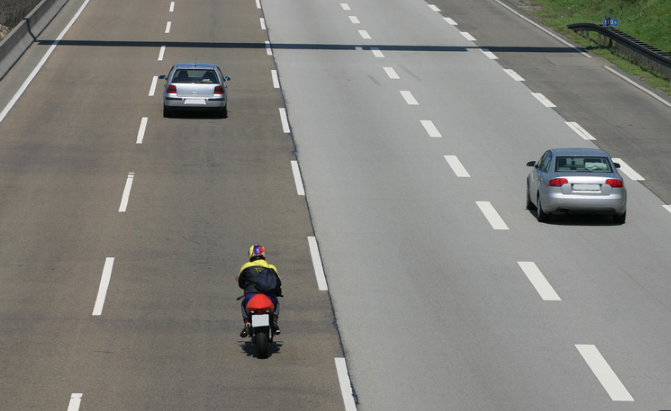
Motorcycle riding in Georgia is more than just a mode of transportation; it is a culture. From the scenic curves of the North Georgia mountains to the bustling, high-stakes commutes on I-285 and GA-400, riders face a unique set of challenges. Chief among these challenges is navigating the complex web of traffic laws that govern how motorcycles move through traffic.
Motorcycle riders debate among themselves about doing lane splitting. As traffic congestion in cities like Atlanta, Savannah, and Augusta reaches all-time highs, riders are looking for ways to stay mobile and safe. However, Georgia’s legal stance remains firm. To protect your health, your license, and your right to compensation after an accident, it is essential to understand the intersection of Georgia’s motorcycle statutes and the reality of the road.
Is Lane Splitting Legal in Georgia?
In Georgia, lane splitting is not legal. While it might seem like a smart way to beat the heat or the clock, lane splitting is illegal throughout the Peach State. To stay on the right side of the law and keep your insurance rates down, it helps to clear up the confusion between a few common terms:
- Lane Splitting: This is when a motorcyclist rides between two lanes of moving traffic. If you’re cruising at 30 mph and pass between two cars in adjacent lanes, you’re lane splitting.
- Lane Filtering: This usually happens when traffic is stopped or barely moving, like at a red light or in a massive jam. The motorcycle driver moves between vehicles to reach the front of the line. Even though the speeds are lower, Georgia still classifies this as riding between lanes.
- Lane Sharing: This is the only one that’s legal. Lane sharing is when two motorcycles ride side-by-side within a single traffic lane. As long as there are only two of you and you stay safely within the lines, you’re good to go.
According to Georgia Code § 40-6-312, motorcyclists are prohibited from operating between lanes of traffic, whether that traffic is moving or stopped. In short, Georgia law requires you to pick a lane and stay in it; passing between vehicles is off-limits, no matter how slow the traffic is moving.
Why Georgia Bans Lane Splitting?
While some motorcyclists suggest that lane splitting helps reduce traffic congestion, Georgia authorities disagree, citing significant safety concerns that justify the current ban.
Here’s why lane splitting is considered dangerous:
- Reduced driver awareness: Other motorists often don’t expect a motorcycle to approach between lanes and may change lanes without seeing a motorcyclist.
- Limited space to maneuver: The gap between cars may not provide enough room for safe braking or swerving to avoid sudden hazards.
- Unpredictable movement: When riders weave between traffic, it creates unexpected motion for drivers who assume all vehicles remain within lanes.
- Blind spots and mirrors: Vehicles commonly have blind spots where riders can disappear from view, increasing the risk of sideswipe collisions.
For these reasons, Georgia’s motorcycle safety laws require riders to follow the same lane position rules as cars and trucks. A motorcycle must have full use of a lane and cannot be driven between lines or rows of stopped or moving traffic.
How Lane Splitting Affects Motorcycle Accident Liability?
Since lane splitting is prohibited in Georgia, a rider engaging in the practice may be found automatically liable or partially at fault for any resulting motorcycle accident.
Georgia follows a modified comparative negligence rule. This means a rider may recover compensation as long as they are less than 50% responsible for the accident. However, violating a traffic law, such as lane splitting, can be used as evidence of negligence.
If a rider was lane splitting at the time of the collision:
- Insurance companies may argue the rider’s conduct contributed to the crash.
- Fault may be assigned partially or primarily to the rider.
- Compensation can be reduced based on the rider’s percentage of responsibility.
- If the rider is found 50% or more at fault, recovery may be barred.
Even allegations of lane splitting, whether accurate or not, can complicate negotiations and lower settlement value. That is why evidence, witness statements, and accident reconstruction often play a critical role in these cases, because they help clarify how the crash actually occurred and prevent insurance companies from unfairly shifting blame onto the rider.
Understanding how Georgia’s lane-splitting laws intersect with liability rules is essential for protecting your rights after a motorcycle accident.
Penalties for Illegal Lane Splitting in Georgia
Riding between lanes in Georgia isn’t just dangerous; it can also lead to legal consequences. Law enforcement officers can issue a traffic citation for lane splitting, which may result in:
- Fines are typically several hundred dollars, depending on the county
- Points are added to your driving record, which can raise your insurance premiums
- Possible license suspension if too many points accumulate
- Increased scrutiny from police and insurers if an accident occurs during lane splitting
While a first-time slip-up is bad enough, getting caught multiple times or causing an accident while splitting lanes can lead to serious legal heat in Georgia, ranging from heavy fines to points on your license. It’s one of many reasons to stay within the legal lane and avoid unpredictable traffic maneuvers.
Motorcycle Safety Laws Related to Lane Splitting

Georgia’s motorcycle safety laws don’t stop at prohibiting lane splitting. The state has a comprehensive set of rules designed to protect riders and other motorists.
Some important motorcycle safety requirements in Georgia include:
- Helmet laws: All riders and passengers must wear helmets that meet Department of Transportation (DOT) standards.
- Lane discipline: Motorcycles must remain in their lane and cannot share a lane with a car or truck.
- Two-abread rule: Up to two motorcycles may ride side-by-side in a single lane.
- Equipment requirements: Motorcycles must have at least one headlight, functional taillights, and other safety equipment mandated by law.
- Class M license: Riders must have the appropriate motorcycle endorsement on their driver’s license.
Following these rules not only improves rider safety but also strengthens your legal position if you’re involved in a crash.
Why Lane Splitting Still Tempts Riders
Despite the legal risks and safety warnings, many motorcyclists consider doing lane splitting, especially during heavy traffic. Riders often cite these perceived benefits:
- Avoiding rear-end accidents in stop-and-go traffic
- Reducing overheating and engine wear in congestion
- Saving time during long commutes
- Easier navigation through gridlock or work zones
Even though these reasons may make lane splitting seem practical, the legal and safety trade-offs in Georgia tend to outweigh them. Staying within your lane not only complies with the law but also reduces the chance of being caught in a complex liability dispute after an accident.
What to Do After a Motorcycle Accident Involving Lane Splitting Allegations?
If you’re involved in a crash and lane splitting is alleged (whether true or not), taking the right steps can protect your health and legal rights:
- Call the police and make sure a police report is filed.
- Seek medical attention immediately. Documenting injuries early is critical.
- Take photos of the scene, motorcycles, and vehicle positions.
- Gather witness information when possible.
- Avoid admitting fault at the scene or to insurance adjusters.
- Speak with an experienced Georgia motorcycle accident attorney who understands Georgia’s laws and how lane splitting allegations might affect your claim.
A legal professional can help demonstrate fault, negotiate with insurers, and ensure that your compensation reflects both the crash and your injuries.
When to Contact a Georgia Motorcycle Accident Lawyer?
Not every minor scrape requires a legal team. However, because Georgia is a “comparative negligence” state, motorcycle claims can get complicated fast. If your accident involves more than just a scratched fairing, professional legal advice is often the difference between a denied claim and a full recovery.
6 Signs You Need Legal Representation
You should reach out to a Georgia motorcycle accident attorney immediately if:
- You sustained injuries: If you required a hospital visit, surgery, or ongoing physical therapy.
- Liability is a "He-Said, She-Said": The other driver denies responsibility or is trying to blame you.
- The Insurance Company is calling: They are asking for a recorded statement or offering a "quick" lowball settlement.
- Reckless driving was involved: The other driver was cited for speeding, aggressive driving, or DUI.
- It involves a commercial vehicle: Accidents with delivery vans or semi-trucks involve complex federal laws.
- Lane splitting is an issue: You need to know how Georgia’s specific lane laws impact your ability to recover damages.
Overcoming “Biker Bias”
It’s an unfortunate reality: insurance adjusters often walk into a claim with a bias against riders. They frequently assume the motorcyclist was speeding or weaving through traffic, even when the evidence says otherwise.
An experienced lawyer acts as your shield. We step in early to preserve evidence, secure traffic camera footage, and interview witnesses before their memories fade. Our goal is to ensure the insurance company sees the facts, not the stereotypes.
Don’t Let the Clock Run Out
In Georgia, the statute of limitations for personal injury claims is generally two years. While that might sound like a long time, physical evidence and witness leads can disappear in a matter of weeks.
Starting the process early allows you to focus 100% on your physical recovery while we handle the paperwork and negotiations.
Act Now to Protect Your Motorcycle Accident Claim
In Georgia, the rules around lane splitting are pretty black and white: it’s currently illegal. While it might feel like a shortcut through gridlock, a lane-splitting citation can do more than just hurt your wallet; it can seriously complicate your ability to get fair compensation if an accident happens.
Accidents are overwhelming, and the legal aftermath shouldn’t be something you handle solo. Whether lane splitting played a role in your accident or not, you deserve an advocate who understands the nuances of Georgia road laws.
At Seay/Felton LLC Trial Lawyers, we treat our clients like neighbors, not case numbers. We’ll sit down with you, look at the facts, and figure out the best path forward to get you the compensation you need to get back on two wheels.
Ready to talk? Reach out to us today for a free consultation. Let’s make sure your rights are protected.